PART 1 (Of 5)
The REAL Reason Agents Pass on Diverse Manuscripts
(What Agents and Acquisitions Editors Will Never Tell You)
DISCLAIMER
What you’re about to learn is powerful and for OwnVoices/diverse authors ONLY.
If you are NOT an OwnVoices author (defined as a PoC, queer, trans, disabled, neurodivergent or otherwise marginalized author writing novels with protagonist(s) from the same marginalized communities as you belong to) please scroll past. This was not written for you.
If you know another diverse author who would benefit from this, please share this with them.
But the insight and tools I’m about to show you need to stay within the community. If you’re here, it’s because you already know non-diverse authors have an automatic advantage, and if this gets into their hands the gap between us and them could quickly become insurmountable.
T
he moment agents have to choose, you lose.
I noticed it gradually, the way your ears adjust to a foreign language while abroad.
At my little desk in the corner of the breakroom by the agent offices, desperately hoping the slacks and array of polka dot or pin striped blouses from Marshalls I was wearing gave “corporate professional” and not “college kid working for someone other than her father for the first time,” I sat back, observing some of the most successful, high-powered literary agents in New York.
Suited and booted, with their panoramic views of the Manhattan skyline from their corner offices, I was like a mortal among gods. Harboring my own secret dreams of being an author and literary agent du jour, I’d be a sponge, always learning, always watching, always volunteering to take a load off of someone’s plate.
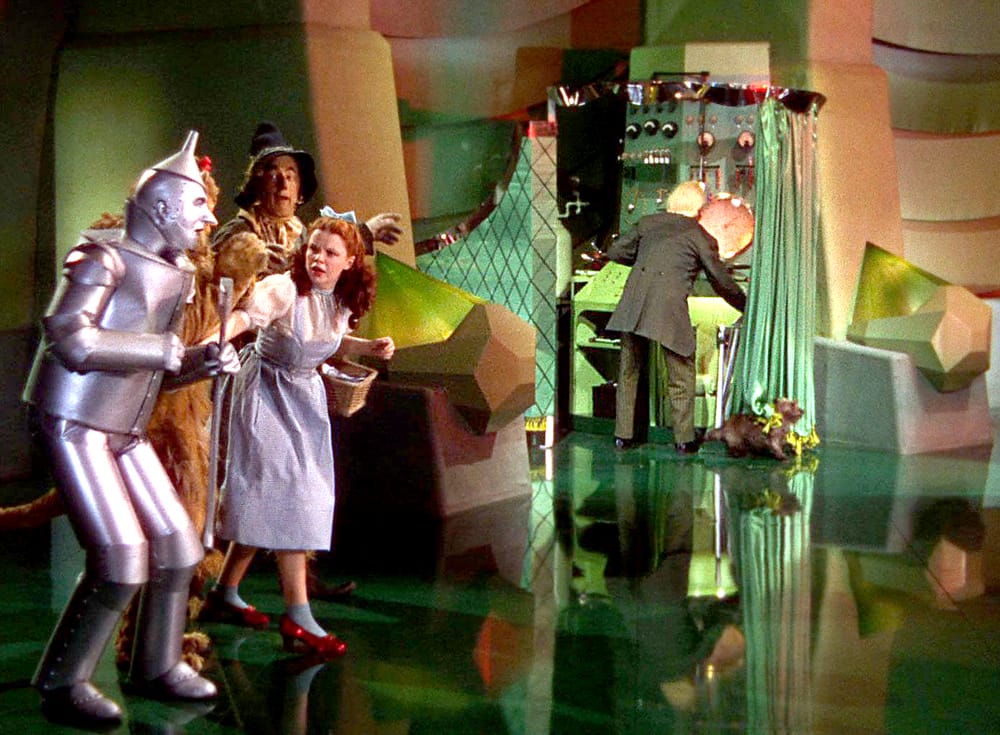
I was Dorothy pulling back the curtain on the Wizard, completely unaware I was about to ruin my own sense of magic.
I was quickly graced with the duty of pruning the slushpile for a few different agents and find the hidden gems, the ones that I could actually see gracing the shelves of Barnes & Noble, and to send form rejections to the creepy handwritten queries that looked like they were penned by a serial killer, the physical manuscript sent from a penitentiary about a side character from a very well-known crime movie, and the books about the many wonderful uses of hardboiled eggs (all of these are true stories).
I found it reassuring, actually, the rhythm of it, the confidence in knowing that 95% of manuscripts sent to agents should be buried in a shoebox in the back of the author’s closet (mean, but true), and naturally the right 5% got their big break. If you had a hook-y pitch and could write worth a lick, the book deal was basically inevitable.
And then:
“I’m not sure there’s a market for it.”
For a snappy YA with The Hate U Give as a comp.
“I don’t think it has the commercial appeal we’re looking for.”
For women’s fiction with a black female protagonist.
“It’s too niche. Won’t sell.”
For a collection of personal essays from a disabled author.
“It’s not marketable.”
The words flew out of different mouths verbatim, as if a line from a script I hadn’t been given but everyone else had already memorized. Too practiced. Too easy. Too much of a coincidence that these words mostly applied to diverse/#OwnVoices novels.
Maybe I was reading too deeply into it? Sure, the only other brown thing in Sterling Lord Literistic’s offices was the coffee the agents inhaled by the gallon, and only one of them was queer (and surprise! all the queer novels were repped by him). Sure, they had a small library section packed with hundreds of titles, only a tiny handful of which were written by queer, trans or authors of color. But good books get book deals. That’s the way it worked, right?
I swallowed my unease down, eager to please at what was to be the first step in my own career in the publishing industry, a life-long dream. And my work spoke for itself–I even got “promoted” from the breakroom corner into my own little office by the door, got taken under the wing of a couple of senior agents, and started answering calls on the agents’ behalf. I was a natural, or so I was told.
And then it became less subtle.
“I already have a Latino author on my list.”
“I think this is too similar to another client of mine.”
As the months wore on, I became fluent in agent-speak. And it became crystal clear…
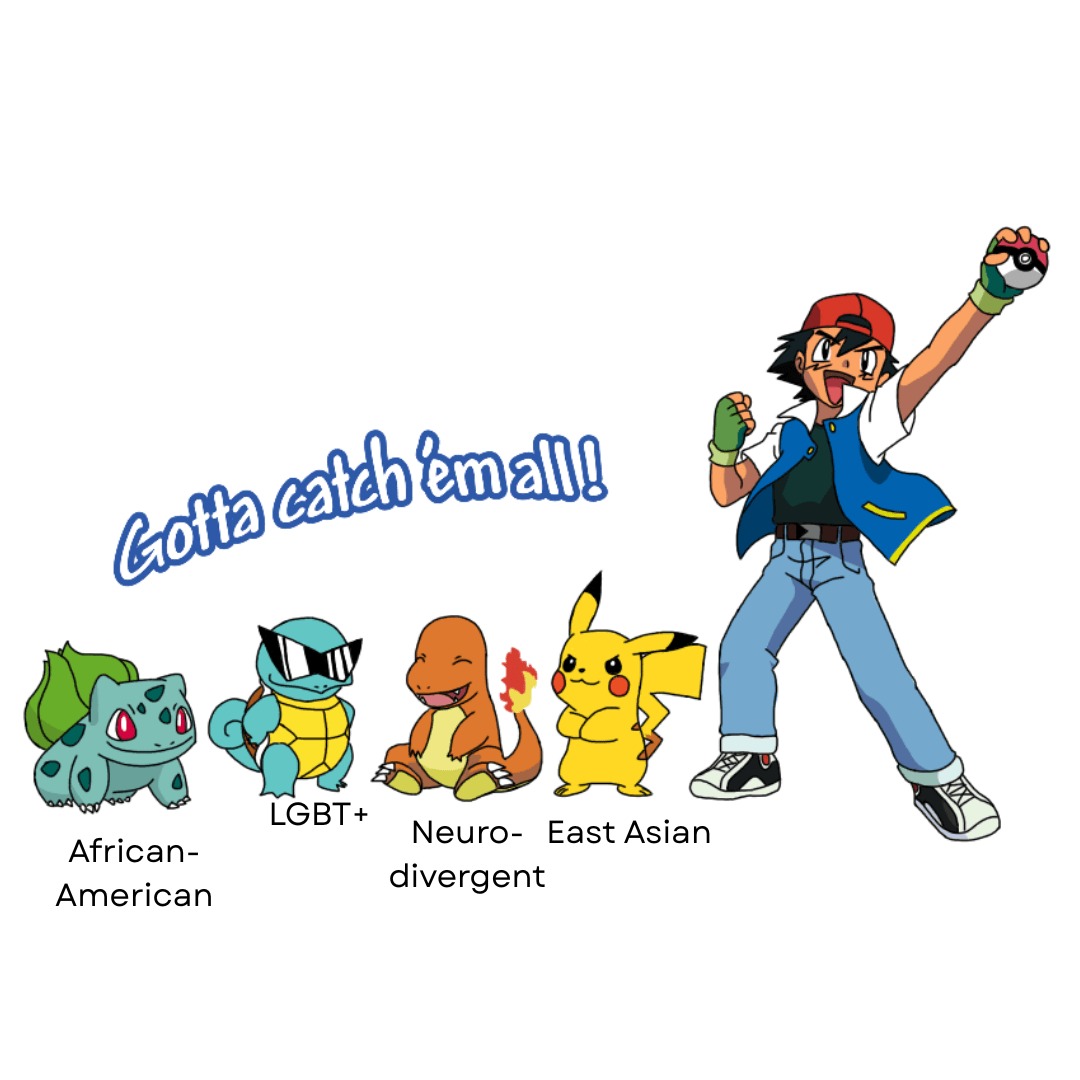
Marginalized authors were like Pokemon. You could occasionally collect them, but there could only be one. One per list. Sometimes only one or two per agency.
By the time my internship had ended, despite being told I had a standing job offer upon graduation, the dream was dead. I loved the work, I loved the two agents who mentored me, but I could not stand to be one of the very gatekeepers that locked people like me out.
And I learned a lesson that would brutally be burned into my skull again and again over the following years…
"It's like the #OwnVoices apocalypse"
That’s been the general sentiment expressed by just about every queer, trans, neurodivergent or PoC author within virtual spitting distance given the current dumpster fire that is, well, everything, at the moment.
And as much as I renounce this doom and gloom, thank you very much, I’d have to have been stoned (and not in the fun way) to not understand their frustration.
My client who writes queer YA historical fantasy, came to me ready to pull out her teeth like Anne Hathaway in Les Mis over the state of publishing in 2026:
“I read yesterday (I think from PEN America) that publishers are pulling back on LGBTQ books especially in kidlit, because of Velveeta Voldemort and the dumpster fire of a "government." Since publishers can't sell them to the distributors who sell them to schools, editors aren't acquiring them, and even telling big YA agents like [redacted] they're pulling back on queer books. I'm at an impasse with trad pub at the moment."
And these aren’t newbie authors querying baby’s first manuscript.
These are folks racking up request rates higher than I am old ——racking up 10, 14, even 35 manuscript requests from agents who have lists chock-full of their favorite authors (for the record, yes, I am older than 14 ;)).
Agents shower them with praise, requesting the full within days of them sending in a query saying "your voice is impeccable" and "this premise is fantastic.”
Yet they, like you, always end up the querying equivalent of "always the bridesmaid, never the bride." Agents passing their manuscript to colleagues, telling them how talented they are, and saying they were "so close to offering representation”…
Only, they never fucking do.
And these authors end up with 10 dead end fulls and 2 R&Rs from supposedly "editorial" agents, half of whom request every novel they’ve ever queried, only to pass at the 11th hour (and 11 long months of waiting on pins and needles).
The same agents who talk about wanting to see more BIPOC authors or claim to be looking for diverse stories rejecting them, in favor of signing an author who looks and sounds exactly like the 12 authors they signed before.
I wish this surprised me. But…
Here’s the truth about diverse manuscripts agents will never say out loud:
Making your manuscript the best choice out of the slushpile is the quickest path to rejection.
Let me explain.
But first, quick housekeeping before we go further: when I say marginalized, diverse or #OwnVoices novels, I mean queer, trans, disabled, neurodivergent, immigrant, people-of-color authors, writing protagonists from their own community. Full stop.
(I already know some white guy's going to slide into my comments with "well I wrote a Chinese lesbian character and an agent rejected it because I'm not from that community, that's SO unfair" — this came from a real comment on one of my posts)
Okay. Elephant, meet room.
All of the above? That was back in 2017.
Right now agents and acquisitions editors are more risk averse than I've ever seen them given the trashfire that is the current political landscape.
There's a lot currently disrupting the publishing industry, and I promise you, none of it is making agents less skittish.
After the #PublishingSoWhite reckoning in 2020, we got a nice little bump in diverse books — peaking around 2021 and 2024. (Publishing moves at the speed of my 90 year old grandfather, so books acquired in 2021-2022 are the ones that finally limped onto shelves in 2024.) Even if that bump still left diverse authors trailing behind non-diverse authors by a landslide.
Good news though, right?
Welp.
That wave already crested, my friend.
And it’s already on a downswing—in large part thanks to our friendly neighborhood book bans.
School and library pullback guts traditional publishing distribution, and diverse books eat the worst of it. Agents know this. Publishers pretend like they don’t make decisions based off of it. Writers and readers suffer because of it.
For example:
Dial Books — an imprint literally built on publishing powerful books from marginalized authors — closed in March 2026. Roaring Brook Press shuttered a few weeks later.
Meanwhile, agent inboxes have become dead zones.
I talked to an agent last year who said she’s pulling 600 queries a week. Six. Hundred. That's roughly 32,000 queries a year, into one single inbox, competing for maybe 3 client spots if the stars align and Mercury isn't in retrograde.
This, my friends, is what we call a demand deficit.
Less appetite from publishers to acquire diverse novels (see: everything above), and less bandwidth from agents, who are drowning, running on Red Bull and hope, trying to claw through a slushpile that regenerates faster than they can read it.
Here's what that actually means for you, and I need you to really let this sink into your bones: there will always — ALWAYS — be a non-diverse author sitting in that inbox who is the easier choice.
If an agent is deciding between your well-written OwnVoices novel — the one she knows she'll have to fight tooth and nail for, on submission, for budget, for shelf space — and an equally well-written non-diverse novel that comes with zero of that baggage, and she is running on fumes, and her ridiculous $4000/ Manhattan rent depends on picking correctly?
Well, I’ll let you guess what happens next…

I’ve seen it with my own eyes. I’ve been an editor and book coach for unpublished fiction manuscripts for the better part of 6 years. I have non-diverse authors that managed to snag an agent in months.
And I've worked with genuinely great, hard-working, incredibly talented OwnVoices authors who are still white-knuckling it through the query trenches despite having so many things in their favor.
All the while, trying to get agents to think and believe that their novel is worth it.
This is where they go horribly wrong.
Everything you were ever taught about querying is engineered to appeal to an agent's conscious, thinking, evaluating brain. Polish your prose. Tighten your structure. Nail your query letter. Do it all correctly, and eventually, someone will choose you.
The problem?
The second an agent starts thinking while reading your manuscript, you can kiss your chances of an offer of representation goodbye.
Here's what that thinking actually sounds like, via your full manuscript rejection letters:
"I'm not sure I know how to sell this."
"I don't know if there's a market for this right now."
"There’s a lot to admire here, but I'm not sure it's right for my list."
"I'm just not quite connecting with it."
Every single one of those is a rational brain doing exactly its job — fault-finding. Remember, six hundred queries a week, room for maybe three new clients a year (if that). That brain is not out here hunting for reasons to say yes. It is hunting, ruthlessly, for reasons to say no.
And the agents who insist they don't do this?
Unself-aware at best, gaslighting at worst.
So I repeat:
The moment agents have to choose, you lose.
The only move left for diverse authors is to stop feeling like a choice at all.
Let me let you in on a little secret I learned in that Manhattan high-rise…
Decisions about who gets an offer of representation are not made in an agent's brain. They're made in her body.
You see, manuscripts that get offers quickly—the ones agents stay up until 4am reading, neglecting their laundry and their dinner plans—aren't just well-written.
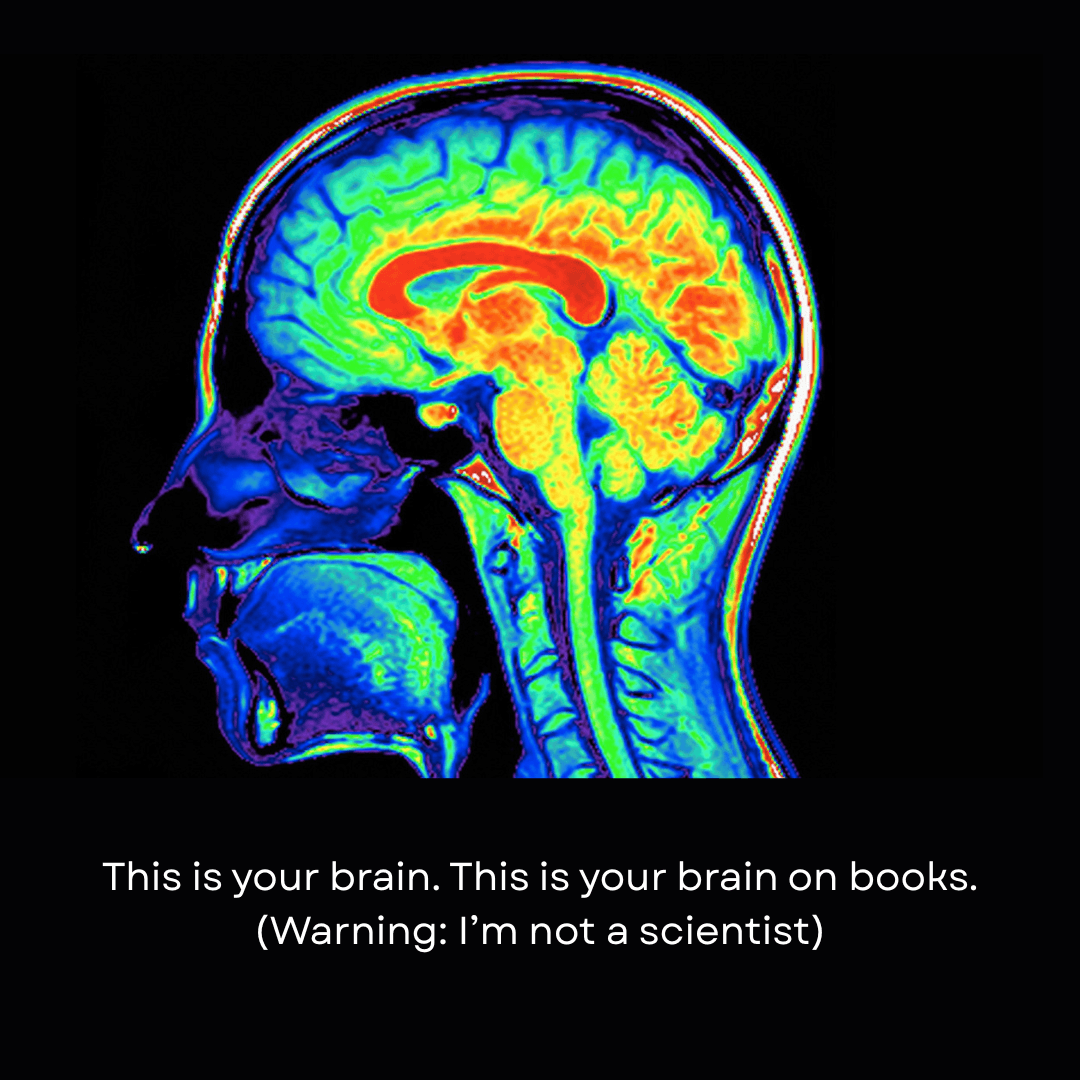
They create a physiological response. The same kind responsible for the chills you get during that horror movie, or the warm, gooey feeling followed by goosebumps that pop up as you cuddle someone you love.
They're activating the brain's reward centers in a way that makes the agent's nervous system scream: MORE. NOW. DON'T STOP.
And the invisible elements that create this response? They have nothing to do with whether your inciting incident lands on page 12 or page 15. They have nothing to do with whether your dialogue is snappy or your descriptions are tight.
They’re based around something else entirely. Something you can't see in your own work because you're too close to it.
But they make the difference between an agent skimming your pages with professional approval only to say they “didn’t connect…” and an agent physically unable to put your manuscript down.
When your manuscript hijacks an agent's nervous system, she stops evaluating and starts experiencing. She loses track of time. She loses sense of self. She is not thinking about book bans, or comp titles or the space left on her list. She is not calculating a single ounce of risk.
She is not deciding to offer you representation.
She realizes she already has.
That's the only game worth playing as a diverse author.
Once you internalize this, it changes everything.
That’s the good news.
The bad news?
The very things you’ve been taught would boost your query odds and get agents in a chokehold, is actually sabotaging your chances of an offer of representation.
And the more you polish and line edit, the more you guarantee yourself a folder full of full rejections.
You’re about to learn why your best efforts haven’t been enough to get an offer of representation and how to bulletproof your book against the volatility of the current market (or if, after reading all the above, you prefer to rely on “luck” and “good writing” to get you signed, believing the right agent will swipe you up once you’ve paid your dues and the time is right side eye more power to you).
But first, you’ll need context. Knowledge is power.
And once you realize how the commonly doled-out advice is undermining your novel, you’ll have the tools to bend the querying game in your favor…
SUBTEXT
1. What literary agents say and what literary agents do are very different things
2. Since we as diverse authors will never be the logical choice, we have to appeal to an agent's subconscious, rather than conscious, brain
3. The question becomes, how can we hijack an agent's brain with our prose, and why hasn't working on your craft been enough to do so?